Experience funnel
“Stay at Lemon” doesn't open with a price table, but with what a 2-, 4- or 6-night stay looks like. The restaurant got its own page and video loop. The guest picks the trip; the room falls into place.
Lemon Beach came to us with a brief for a new resort website. Instead, we changed the question the site answers - and built an experience platform the resort team runs itself, in six languages. After launch we spent thirty days listening to the data. Here's how we did it - and what you can take from it.
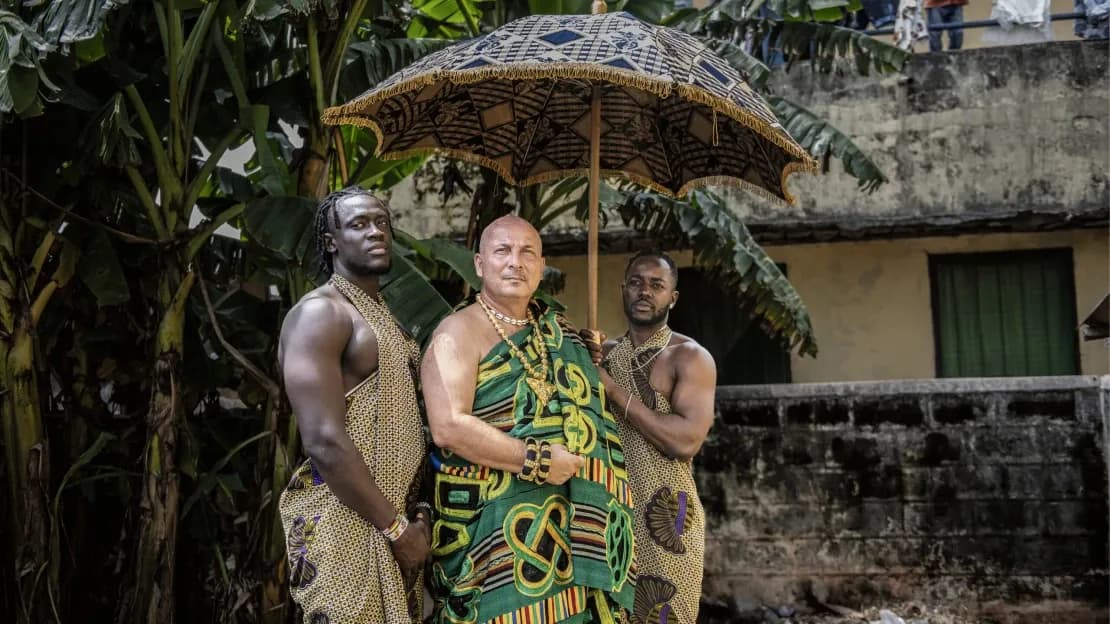
Lemon Beach Resort is an independent boutique resort on the coast of Ghana - rooms, a restaurant, on-site activities and curated multi-day trips into the rest of the country.
It serves international travelers, the Ghanaian diaspora and domestic guests - in six languages and three payment currencies. A strong product, a real experience; just a website that couldn't yet sell it.
The client came to us with a simple brief: we need a new website for the resort. A homepage, rooms with prices, a booking button - a classic hotel website.
But a hotel website is a transaction. And Lemon Beach doesn't sell rooms - it sells Ghana. A stretch of palm-lined coast, Akan home cooking, a trip to Kakum and Cape Coast. The room is the smallest unit of what a guest buys, and usually the last thing they decide on.
So the question wasn't “how do we build a website for the resort”, but “what would that website look like if the room were the consequence of the trip, not the trip itself?”. The rest of this study is what that question produced.
Before we drew a single layout, we shifted the premise. The site wasn't going to be a room price list, but a guide through the experience - the stay, the food, the trip inland. The room would only appear as a natural consequence of what the guest chooses.
That change of question shaped the entire rest of the project. Every later phase is an answer to it.
Or raise the value they see in you? Sometimes it's not about more features, but a different question for your website to answer. Get in touch - we'll find it together.
An experience has one awkward property: it's invisible until it happens. A static photo of the beach is just a photo of the beach - it makes the guest do the imaginative work most won't do.
So we communicated the experience through media, and above all through short videos. An itinerary film that scrolls through the guest's day, a video loop of the restaurant, short films of each activity. The goal wasn't to make the site look pretty, but to let the guest feel an authentic experience before they even arrive.
On that premise stand the four moves that turned the website into a platform.
“Stay at Lemon” doesn't open with a price table, but with what a 2-, 4- or 6-night stay looks like. The restaurant got its own page and video loop. The guest picks the trip; the room falls into place.
Curated trips on their own pages and a five-step planner for guests who want to build their own. We pulled the whole country onto the site.
Itinerary film, video loops and a scrolling gallery. The unit of a page is no longer a room - it's a minute. Sessions got longer, scroll depth doubled.
Next.js + a CMS the resort team owns. Six languages, three payment channels, on-brand emails - and a new trip route live by end of day, without a developer.
A redesign is an opinion. After launch we wanted to know whether the opinion held - so before we started we wired the site to Microsoft Clarity and listened for thirty days. No premature A/B tests, no armchair optimization. Real guests, real devices, real locales.
On a new site we watched two things at once. The obvious one: are completed bookings rising? The one that's easy to miss, and just as important: is conversion dropping after a big change? The fact that bookings didn't fall after switching to an entirely new site means guests oriented themselves immediately - nothing threw them out.
Both came good. The experience-first thesis held: the pages we expected guests to spend time on were exactly the ones they did. The configurator was sticky. And direct reservations began to climb.
Launch isn't the finish line. It's the start of listening.
No secret here. These are three convictions that shaped the whole project and work elsewhere too.
Software doesn't produce the feeling - the beach, the food, the welcome at the door do. A good site extends that feeling into planning, expectation, the guest's language and currency. Know which way you're pushing.
The configurator, the inquiry flow, the itinerary film - these aren't destinations but sequences. When the flow is the unit of design, every page in it has a job.
Opinions are guesses; session recordings are evidence. We watch for a month - both growth and whether anything is slipping - and only then decide what to fix next.
We didn't deliver exactly what the brief asked for. The brief asked for a resort website; what emerged is a platform - an experience funnel, an inquiry funnel, localization, payments, content editing and measurement. The team can run it without us, the data is honest, and the room is finally the consequence of the trip, not the trip itself.
Got a great product or idea but aren't sure how to ship it or take it to the next level? We're not just a code shop - we're product partners who treat your project like our own. We'll challenge assumptions, map the direction, and build it so it actually works. Get in touch and we'll find the next step together.
We take on a small number of full builds a year. If the Lemon Beach story resonates, the next conversation starts here.
[email protected]We're a small team of designers and developers based in Prague. We build websites and products for companies that want to grow - not just have a new site. Every project we run is a product: strategy, design, build, and post-launch data.